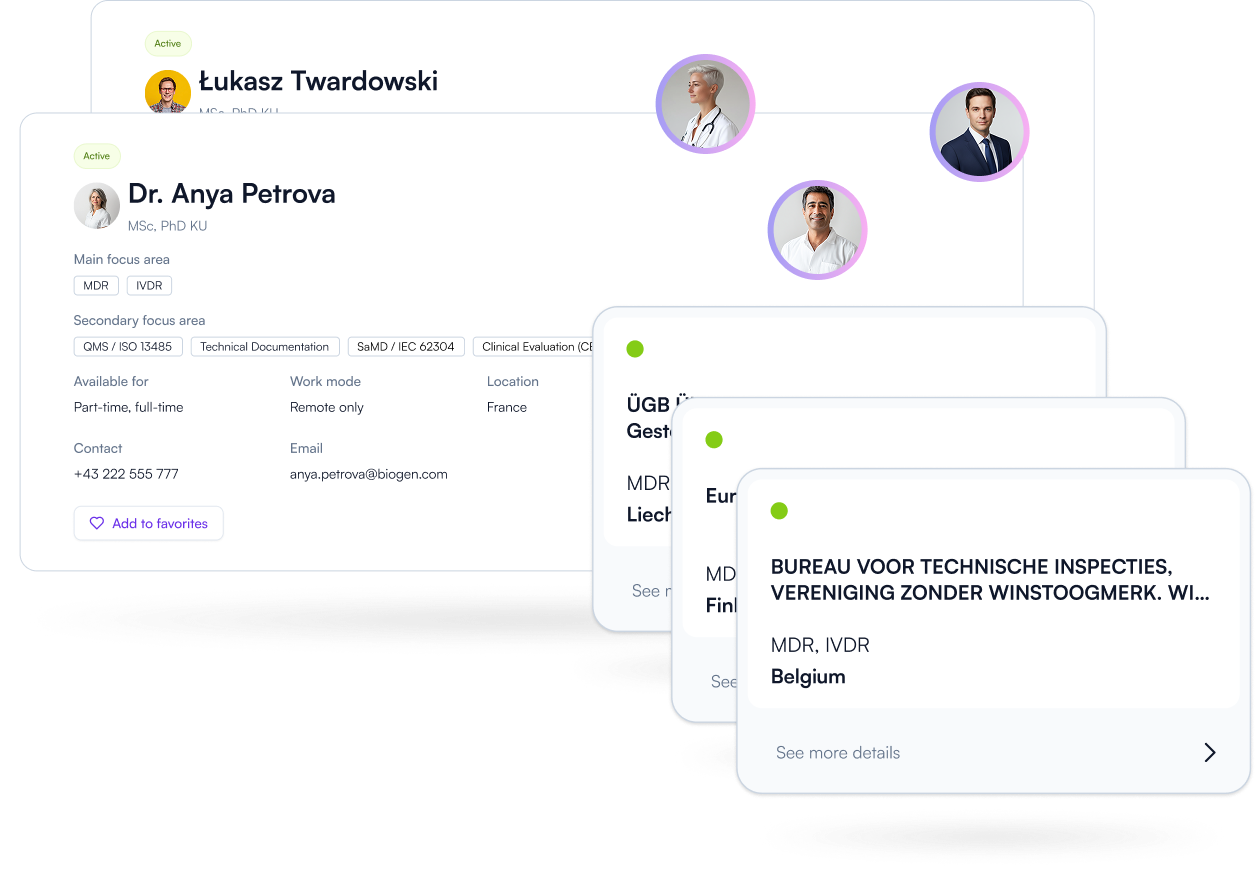
Notified bodies & experts directory
Find the right experts faster. Compare specialization, scope, and collaboration models — connect when your project needs regulatory support. Less searching, better fit, faster progress.
Getting your product to market under the MDR can feel complex. We break the process into clear, simple steps, from a free MDR check to a full regulatory workflow, with built-in AI support.
A non-profit, backed by


Health Tech Pathways is operated by Health Tech Hub Copenhagen, a non-profit innovation hub bringing health tech to the healthcare sector. Join the hub.
Breaking down regulatory compliance into bite-sized pieces.
Tell us what you're building and who it's for. We turn your input into a clear description that fits regulatory expectations.
We show you if MDR applies, what risk class you fall into, and the route you'll need to take.
Follow a structured plan to create your documentation step by step. Instead of starting from scratch, you get guidance, templates, checklists, and a clear sense of direction.
Start free. Upgrade when you're ready.
Shaped and vetted by regulatory specialists. Grounded in official EU guidance.
Used by multiple industry experts.
Not generic templates. The platform mirrors how teams actually prepare medical device documentation — step-by-step, with structured tasks, organised folders, and clear "what to include" guidance.
From day one, you work in a reviewable structure. Track progress, maintain consistency across documents, and reduce gaps that slow down internal reviews.
Know what's required — and why. Every step helps you understand the rationale behind decisions, so you can align stakeholders and defend choices with confidence.
Our partners



Plan, draft, and maintain your MDR documentation in one guided workflow.
Find the right experts faster. Compare specialization, scope, and collaboration models — connect when your project needs regulatory support. Less searching, better fit, faster progress.
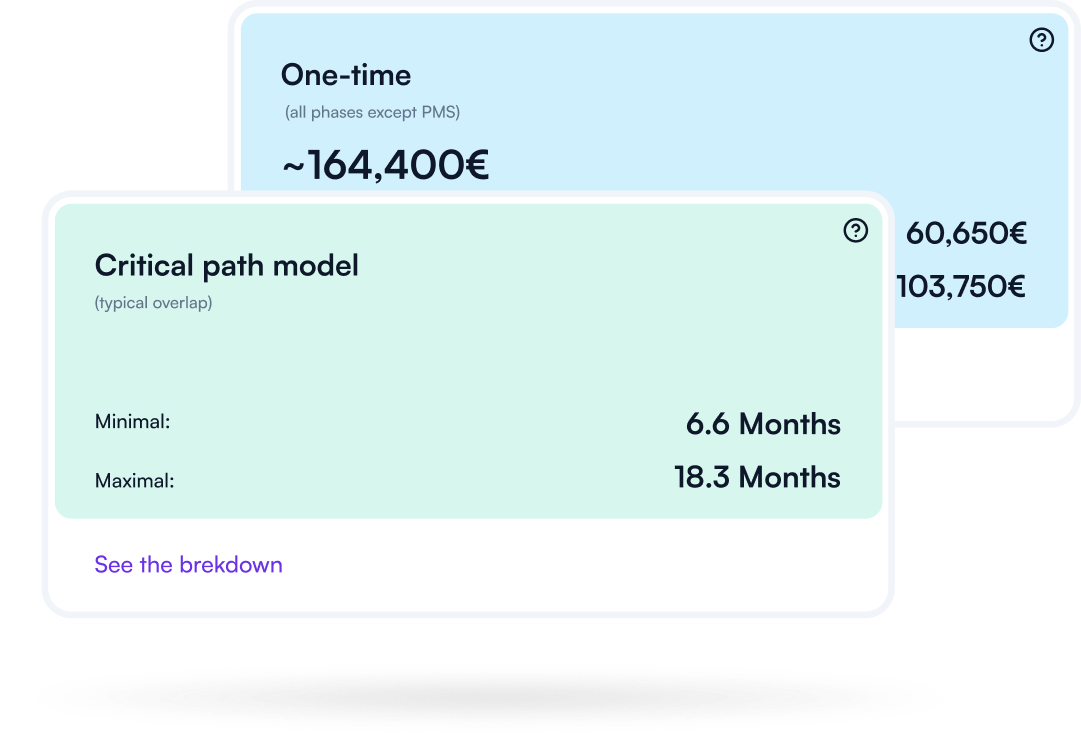
Understand what drives effort and cost across your compliance journey — so you can plan realistically, prioritize, and avoid late surprises. Make timelines and budgets defensible.
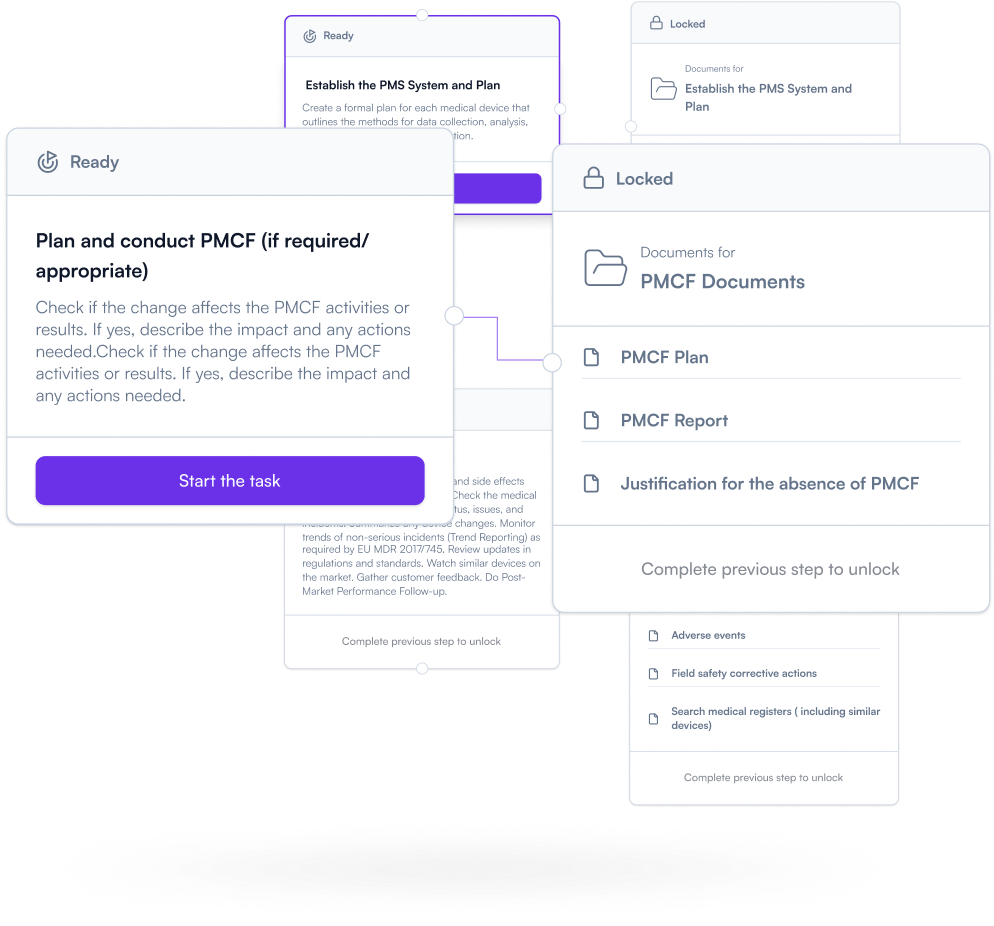
Don't treat PMS (Post-market surveillance) as an afterthought. Plan your post-market activities early and keep documentation aligned as real-world feedback and changes come in. Keep your PMS evidence audit-ready — continuously.
News and insights on health tech regulation, MDR compliance, and medical device pathways.

Let's start simple. A regulatory consultant is the person who guides you through getting your medical device approved in Europe. Most companies have never tried to get a product CE marked. Your strengths is in the product innovation, healthcare understanding, business understanding - and very rarely in the regulatory domain. That's why most companies decide to use an external consultant, who have done this before, that can guide them in the process of choosing the right Notified Body, discus

Let's start simple. If you want to sell a medical device in Europe, and it is above level 1 in MDR, (has an intended use, with a real potential risk, if it doesn't work as planned), you need to have it approved by the EU. The EU has outsourced this authorization to organisations, called a Notified Body. They check your device and confirm it's safe and follows the rules. Once they say yes, you get to put a CE mark on it. That's the stamp that means "this is legal to sell in Europe." Picking whi
In my last post, I shared why we built Health Tech Pathways. This one is about how we designed it — a look into our engine room. But how did we end up with this design and user experience? It started with the customers We have seen the frustration in the eyes of start-up founders when they realise how difficult, expensive, and time-consuming regulatory approval is. After we received the grant of EUR 4.2m from the Novo Nordisk Foundation in October 2024, we decided to understand that frustra
Clear answers for teams building regulated products.
Talk them through with one of our team members.
Get clarity on MDR classification with the 30-day free trial.